

Blog
La Puerta de Almocábar: historic gateway to Muslim Ronda

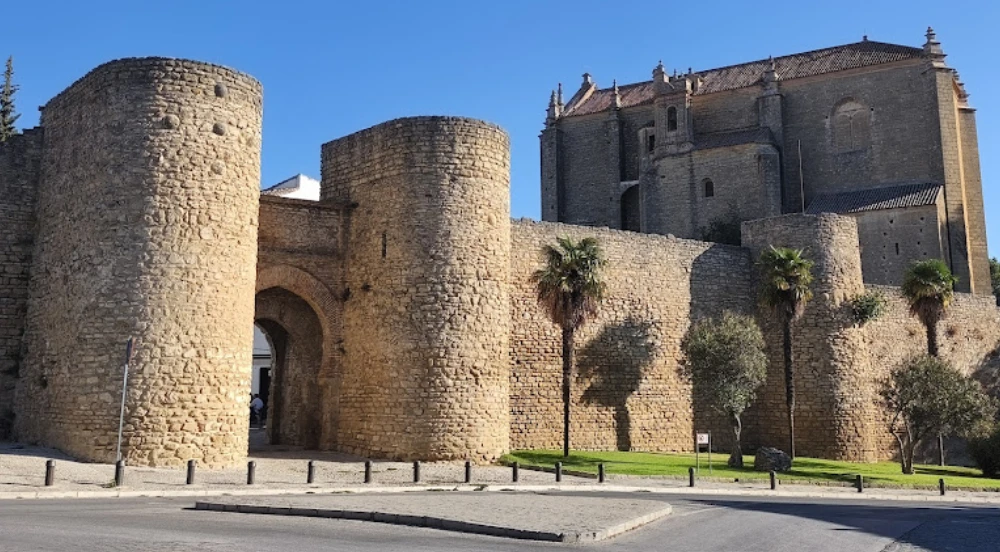
The Puerta de Almocábar is one of the most iconic and best-preserved monuments of Ronda’s ancient city walls. This impressive gate of Arabic origin, built in the 13th century, served for centuries as the main entrance to the Muslim city and today stands as a living testament to the rich Andalusian history that can be felt throughout the Serranía.
The history of a legendary gate
The name “Almocábar” comes from the Arabic “Al-maqabir”, meaning “cemetery”, as the old Muslim necropolis once stood beside the gate, outside the city walls. Built at the end of the 13th century during Nasrid rule, the Puerta de Almocábar protected the main entrance to Ronda’s medina and the so-called Barrio Alto, connecting the city with the southern routes and surrounding countryside.
Its defensive structure is particularly remarkable: it consists of three successive gates, flanked by two semicircular towers that housed guards and supported defensive mechanisms, including the original portcullis and drawbridge. The side arches are horseshoe-shaped, while the central pointed arch shows the opening where the portcullis — known as the “comb” — once descended to reinforce protection.
On May 20, 1485, in front of this very gate in the Plaza de San Francisco, Castilian troops led by the Marquis of Cádiz gathered to end Muslim rule in Ronda and its mountains, marking a turning point in the city’s history.
In the 16th century, during the reign of Charles I, the Puerta de Almocábar was restructured and a monumental Renaissance-style façade was added, crowned with a large imperial coat of arms supported by the Habsburg eagle. This façade, also known as the Gate of Charles V, was restored in 1965 and placed next to the original structure, creating a fascinating architectural contrast between Islamic and Christian periods.
What to discover at Puerta de Almocábar
Unique defensive architecture
The triple gateway structure made the Puerta de Almocábar a nearly impenetrable defensive system. The semicircular masonry towers, with their arrow slits for archers, demonstrate the military expertise of Nasrid builders. Walking between the walls feels like stepping into a passage through time.
The imperial coat of arms and Renaissance façade
The impressive 16th-century façade, with its stone semicircular arch and the coat of arms of Charles I, symbolizes the power of the Spanish monarchy after the conquest. This fusion of styles — Islamic and Christian — turns the gate into an open-air architectural history book.
Projectiles from the conquest
Among the most striking details are the projectiles embedded in the towers, placed by Christian troops in the shape of a cross to symbolize the conquest and the city’s return to Christianity. These battle remnants remain visible today, a tangible testimony to the clashes that took place here more than five centuries ago.
El Pilar and the royal drove road
On one side of the gate stands the historic watering place known as El Pilar, a traditional meeting point for locals and horse riders, as well as the beginning of an ancient royal drove road. Even today, you may see women collecting fresh mountain water and horses cooling off beside the protective city walls.
Practical information for your visit
How to get there
The Puerta de Almocábar is located on the southern side of the city walls, separating the Espíritu Santo district from San Francisco. From Plaza de España, it is a pleasant 5–10 minute walk along charming cobbled streets.
Opening times and access
Access: free outdoor access all day
Guided tours: available with prior booking (check at the Tourist Office)
Recommended visit duration: 20–30 minutes to enjoy it at a relaxed pace
Best time to visit: early morning or sunset, when the golden light enhances the centuries-old stone
Complete your day: from medieval walls to wine tourism

After exploring the Puerta de Almocábar and immersing yourself in the Nasrid and Christian history of Ronda, continue your day discovering how the same land once defended by these walls now produces exceptional wines. Just 20 minutes from Ronda’s city center, the Doña Felisa Winery offers a unique experience among vineyards. This family-run winery, recognized among the best in Andalusia, combines winemaking tradition with a privileged natural setting. Enjoy guided tours, wine tastings paired with local products, and raise a glass while overlooking the same mountain landscape that soldiers once watched from the towers of the Puerta de Almocábar eight centuries ago.